



In yet another abrupt reversal of course with respect to Iran, the U.S. Department of the Treasury, at the direction of President Trump, has launched Operation Economic Outcast, which it describes as “an unprecedented, whole-of-government, economic campaign against the Islamic Republic of Iran and its enablers.” Treasury Secretary Scott Bessent has commented that “America is no longer managing the Iranian threat. We are ending it.”
Just two months ago, on June 17, 2026, the U.S. and Iran entered into a Memorandum of Understanding, intended to ease U.S. sanctions and to start a process of reconciliation between the two long-time adversaries. On June 22, 2026, the U.S. Department of the Treasury’s Office of Foreign Assets Control (“OFAC”) issued General License X (“GLX”), temporarily easing restrictions on transactions involving Iranian-origin crude oil, petrochemical products, and petroleum products. That period of de-escalation proved short-lived. By early July, OFAC had revoked GLX. Operation Economic Outcast was announced on August 24, 2026.
According to the Treasury Department, Operation Economic Outcast is intended to sever “every economic lifeline” that supports the Iranian regime and the Islamic Revolutionary Guard Corps ("IRGC"). OFAC is expanding the categories of Iran-related conduct that may be subject to secondary sanctions (i.e., sanctions on non-U.S. persons and entities), and multiple U.S. government agencies are increasing pressure on governments, financial institutions, and commercial actors around the world to cease Iran-related activity.
As part of this initiative, OFAC issued a determination under Executive Order 13902 identifying five sectors of the Iranian economy as now subject to secondary sanctions: the aviation, digital asset, gold, shipping, and technology sectors. The inclusion of the digital asset sector is particularly noteworthy because it signals OFAC’s intention to target cryptocurrency-related activity connected to Iran, alongside more traditional sectors such as shipping and aviation.
The announcement also included a substantial new round of designations. OFAC has sanctioned nearly sixty entities, individuals, and vessels located in multiple jurisdictions for supporting Iran’s efforts to procure nuclear and missile-related technology, conduct cyber operations, evade sanctions, and generate oil-related revenues. These designations are part of the Treasury Department’s effort to target the networks and facilitators that enable Iran to access international commerce and the global financial system.
In addition to these new sanctions measures, OFAC has suspended several longstanding authorizations that had permitted limited interactions between the United States and Iran:
- 31 C.F.R. § 560.544 - Authorizing certain educational activities by U.S. persons in third countries
- 31 C.F.R. § 560.550 - Authorizing certain noncommercial personal remittances to or from Iran
- 31 C.F.R. § 560.554 - Authorizing services related to conferences in the United States or third countries
- Iran General License F - Authorizing certain services in support of professional and amateur sports activities and exchanges involving the United States and Iran
- Iran General License G - Authorizing certain academic exchanges and the exportation or importation of certain educational services
Simultaneously, OFAC has issued General License BB, which provides a very short wind-down period (through September 8, 2026) of activities previously conducted pursuant to those authorizations.
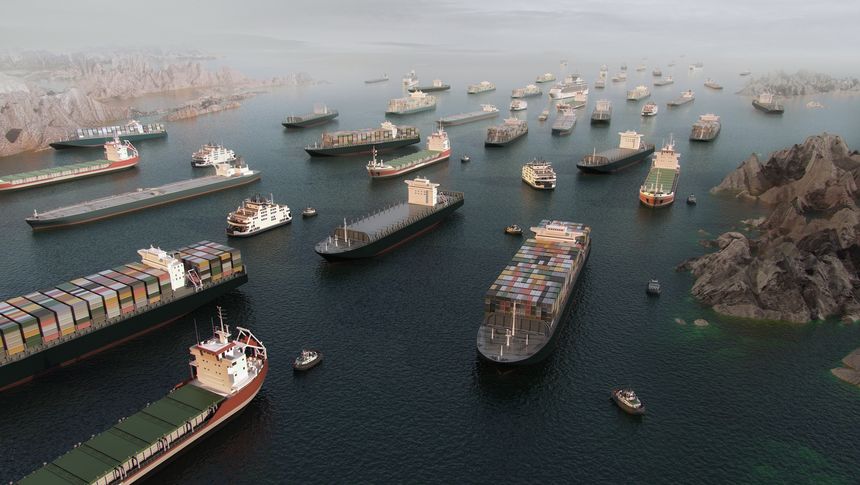
OFAC has also issued updated guidance concerning Iranian demands for payments and guarantees of safe passage through the Strait of Hormuz. OFAC warns that U.S. and non-U.S. persons may face sanctions risks for engaging with designated Iranian entities involved in facilitating transit through the Strait, including by accepting insurance or other services, or even by “responding to information demands for guarantees of safe passage.” OFAC further cautions that prohibited tolls or fees may not be paid through fiat currency, digital assets, offsets, informal swaps, or other in-kind arrangements, and that non-U.S. persons may face secondary sanctions for engaging in such transactions.
The combined effect of these measures is a significant increase in Iran-related sanctions risk. Businesses operating in the five newly-targeted sectors, as well as in sectors, such as energy and financial services, that have long been sanctioned, should carefully assess whether their operations, counterparties, customers, and payment flows have any nexus to Iran. Companies should also review their existing compliance programs to ensure they account for the newly-designated sectors, recent OFAC designations, and the suspension of previously available authorizations.
The rapid sequence of events over the past two months demonstrates the vicissitudes of the current sanctions environment. Katten stands ready to assist clients in navigating this volatile landscape.
/Passle/5fb3c068e5416a1144288bf8/MediaLibrary/Images/2026-10-06-20-06-22-572-6ac554be4e3377a132b4bb3f.png)
/Passle/5fb3c068e5416a1144288bf8/SearchServiceImages/2026-10-01-11-31-16-673-6abe4484864f593e513405f6.jpg)
/Passle/5fb3c068e5416a1144288bf8/SearchServiceImages/2026-09-29-15-42-41-732-6abbdc71460fb9469a258b9e.jpg)
/Passle/5fb3c068e5416a1144288bf8/SearchServiceImages/2026-09-28-14-41-14-052-6aba7c8a266cd4c9ede726a8.jpg)