



Recent events in the Middle East have resulted in a surprising turnaround in U.S. policy toward Iran. A June 17, 2026 MOU has started a process of amelioration between the United States and Iran. On June 22, 2026, the United States issued General License X (GLX), which for 60 days, alleviates some of the most severe sanctions pending against Iran in relation to crude oil and petroleum products. Whether that leads to improved behavior by Iran, or is merely a one-time, short-term attempt at reconciliation, remains to be seen.
Since 1995, the United States has imposed sanctions on Iran’s petrochemical sector. The severity of the sanctions has grown over time, and have come to include not only primary sanctions, which prohibit U.S. persons from engaging in commercial activity with Iran, but also secondary sanctions, which extend certain prohibitions to non-U.S. persons, under pain of exclusion from the U.S. financial system. Principal authority for enforcing sanctions lies with the U.S. Treasury Department’s Office of Foreign Assets Control (OFAC).
Iran-related sanctions have been implemented, for the most part, through the Iranian Transactions and Sanctions Regulations, 31 C.F.R. § 560, and the Iranian Financial Sanctions Regulations, 31 C.F.R. § 561.
In 2015-16, the Obama administration entered into the Joint Comprehensive Plan of Action (JCPOA), under which the secondary sanctions against Iran were largely alleviated. In 2018, President Trump reinstated those sanctions. Since then, OFAC has actively enforced the sanctions, including secondary sanctions, against a variety of violators, including shipping companies, trading companies, other service providers, and specified individuals at those companies.
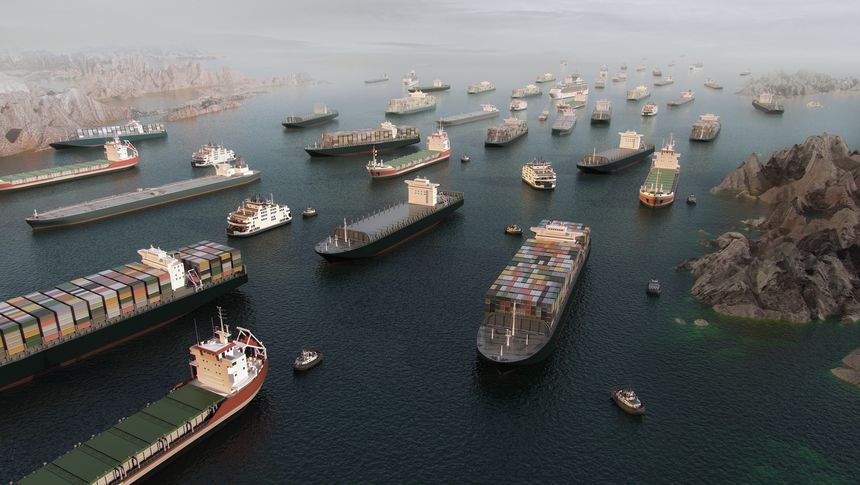
That has now changed. On June 22, 2026, OFAC issued General License X (GLX), authorizing certain transactions involving Iranian-origin crude oil, petrochemical products, and petroleum products through August 21, 2026. As reported in the New York Times, Treasury Secretary Scott Bessent stated this license was the result of “ongoing productive” talks with Iran. GLX specifically authorizes the importation of these products into the United States, along with related services such as safe docking and anchoring, preservation of health and safety of the crew, emergency repairs, environmental mitigation, vessel management, crewing, bunkering, piloting, insurance, classification, and salvage.
It has long been prohibited, even to non-U.S. persons, to transact with Iran using U.S. Dollars. GLX lifts that restriction and permits payment for these goods and services in U.S. Dollars to Iran, the Government of Iran, or a person or entity “blocked” under one or more specified sanctions programs. A “blocked” person (also referred to as a Specially Designated National or “SDN”) is a designated person or entity whose property and interests in property are blocked under a U.S. sanctions program. The newly-exempted SDNs include those designated under Iran-related, terrorism-related, weapons-proliferation, and Russia-related sanctions programs. The exemption is broad, but not unlimited. GLX expressly prohibits any transaction involving a person located in or organized under the laws of North Korea, Cuba, specified regions of Ukraine, or any entity owned or controlled by, or in a joint venture with such persons.
A U.S. person who seeks to rely on GLX should confirm that the proposed activity falls within the scope of GLX, should conduct the appropriate due diligence on counterparties and other transaction participants and beneficiaries, and should consult experienced sanctions counsel before proceeding.
/Passle/5fb3c068e5416a1144288bf8/SearchServiceImages/2026-10-19-17-03-32-820-6ad64d64203f8b556e180c14.jpg)
/Passle/5fb3c068e5416a1144288bf8/SearchServiceImages/2026-10-19-13-53-48-169-6ad620ec9559e780ab56b17e.jpg)
/Passle/5fb3c068e5416a1144288bf8/SearchServiceImages/2026-10-15-19-12-41-278-6ad125a90e7e30becd8e3a93.jpg)
/Passle/5fb3c068e5416a1144288bf8/SearchServiceImages/2026-10-15-21-36-52-140-6ad14774aa6596dee34af4a3.jpg)