



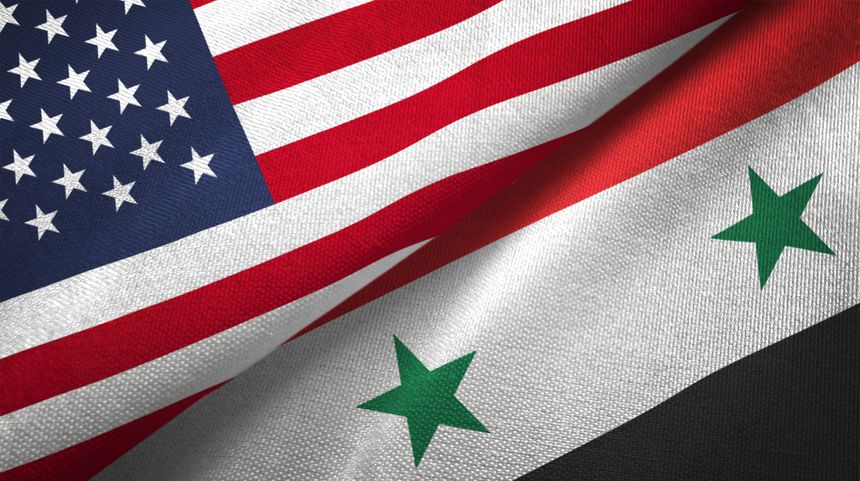
On August 24, 2026, the United States removed the designation of the Syrian Arab Republic (“Syria”) as a State Sponsor of Terrorism. The removal follows a warming of relations between the two countries that began in mid-2025, following the ouster of the al-Assad regime and its replacement by the al-Sharaa government.
I. Background of U.S.-Syria Relations
The United States designated Syria as a State Sponsor of Terrorism in 1979. Although the countries cooperated to some degree on regional issues between 1990 and 2001, relations again deteriorated after 2003. U.S. concerns included Syria’s role as a transit route for foreign fighters entering Iraq, interference in Lebanon, and weapons programs. A limited U.S. effort to reengage Syria began in 2009 but ended after the Syrian government’s violent response to nationwide protests in 2011.
As the protests developed into civil war, the United States called for Bashar al-Assad to leave office, imposed additional sanctions, and intervened militarily in response to terrorist threats. Assad nevertheless remained in power with support from Russia and Iran until opposition forces led by Hay’at Tahrir al-Sham ousted him in December 2024.
The new government, led by Ahmed al-Sharaa, sought closer relations with the United States and relief from sanctions imposed during and before the civil war. Al-Sharaa, whose movement previously had ties to al-Qa’ida, renounced those ties and expanded cooperation with the United States on counterterrorism and regional security. The change in government has reopened the door to a broader reassessment of U.S. policy toward Syria.
II. The State Sponsor of Terrorism Designation
The Secretary of State may designate a country as a State Sponsor of Terrorism upon determining that its government has repeatedly supported acts of international terrorism. The designation principally operates through Section 620A of the Foreign Assistance Act, 22 U.S.C. § 2371; Section 40 of the Arms Export Control Act, 22 U.S.C. § 2780; and Section 1754(c) of the Export Control Reform Act of 2018, 50 U.S.C. § 4813(c). Together, these statutes impose restrictions on U.S. foreign assistance, defense exports and sales, certain dual-use exports, and financial transactions.
Rescission generally requires the President to certify either that the country’s leadership and policies have fundamentally changed, or that the country’s government has not supported international terrorism during the preceding six months and has assured the United States that it will not do so in the future. The applicable statutes also require advance notification to Congress before rescission becomes effective.
III. Removal of Broader U.S. Restrictions
The United States began dismantling its country-wide sanctions against Syria before formally rescinding the terrorism designation. On June 30, 2025, President Trump issued Executive Order 14312, “Providing for the Revocation of Syria Sanctions.” Effective July 1, 2025, E.O. 14312 terminated the national emergency underlying the Syria sanctions program and revoked the following six executive orders:
- Executive Order 13338, issued May 11, 2004,“Blocking Property of Certain Persons and Prohibiting the Export of Certain Goods to Syria”;
- Executive Order 13399, issued April 25, 2006, “Blocking Property of Additional Persons in Connection With the National Emergency with Respect to Syria”;
- Executive Order 13460, issued February 13, 2008, “Blocking Property of Additional Persons in Connection With the National Emergency with Respect to Syria”;
- Executive Order 13572, issued April 29, 2011, “Blocking Property of Certain Persons with Respect to Human Rights Abuses in Syria”;
- Executive Order 13573, issued May 18, 2011, “Blocking Property of Senior Officials of the Government of Syria”; and
- Executive Order 13582, issued August 17, 2011, “Blocking Property of the Government of Syria and Prohibiting Certain Transactions with Respect to Syria.”
As a result, the economic sanctions administered by the U.S. Treasury Department’s Office of Foreign Assets Control (“OFAC”) under the Syrian Sanctions Regulations, 31 C.F.R. Part 542 (“SySR”), ceased to apply. OFAC removed persons blocked solely under the revoked executive orders from its Specially Designated Nationals and Blocked Persons List (the “SDN List”) and unblocked their property and interests in property. Effective August 26, 2025, OFAC formally removed the SySR from the Code of Federal Regulations. Violations occurring before July 1, 2025 may still be investigated or enforced.
E.O. 14312 did not eliminate all Syria-related sanctions. Instead, it amended Executive Order 13894, issued October 14, 2019, “Blocking Property and Suspending Entry of Certain Persons Contributing to the Situation in Syria,” to preserve and expand OFAC’s authority to target Bashar al-Assad and his associates, human-rights abusers, captagon traffickers, and other destabilizing actors. OFAC renamed this targeted framework the Promoting Accountability for Assad and Regional Stabilization Sanctions program.
IV. Rescission of the Terrorism Designation
Although E.O. 14312 terminated the comprehensive Syria sanctions program, Syria’s designation as a State Sponsor of Terrorism remained in place at the time. On July 8, 2026, President Trump notified Congress of his intent to rescind that designation, triggering the required 45-day congressional review period. The rescission became effective on August 24, 2026.
The State Department also rescinded the designation of al-Nusrah Front, also known as Hay’at Tahrir al-Sham, as a Specially Designated Global Terrorist. Subsequently, OFAC removed Hay’at from the SDN List. Syria General License 25, which had authorized certain transactions that would otherwise have been prohibited because of Hay’at’s role in the Syrian government, was therefore no longer necessary and was revoked.
V. Legal Effects of the Rescission
The rescission means that Syria is no longer subject to the prohibitions imposed by the Terrorism List Governments Sanctions Regulations, 31 C.F.R. Part 596, or 22 U.S.C. § 7205(a)(1). It also removes restrictions tied to State Sponsor of Terrorism status, including limits on U.S. foreign assistance, defense exports and sales, certain dual-use exports, and financial activity.
The action does not, however, make Syria a sanctions-free jurisdiction. List-based sanctions remain in effect against designated persons, including Assad and his associates, human-rights abusers, captagon traffickers, ISIS and al-Qa’ida affiliates, Iranian proxies, and persons linked to Syria’s past proliferation activities. Accordingly, transactions involving Syria are no longer broadly prohibited, but businesses must continue to determine whether a counterparty, beneficial owner, intermediary, or other transaction participant appears on the SDN List or is otherwise subject to U.S. restrictions.
The evolving U.S. regulatory framework for Syria presents both new commercial opportunities and continuing compliance challenges. Katten stands ready to assist clients in navigating this changing landscape.
/Passle/5fb3c068e5416a1144288bf8/SearchServiceImages/2026-10-19-17-03-32-820-6ad64d64203f8b556e180c14.jpg)
/Passle/5fb3c068e5416a1144288bf8/SearchServiceImages/2026-10-19-13-53-48-169-6ad620ec9559e780ab56b17e.jpg)
/Passle/5fb3c068e5416a1144288bf8/SearchServiceImages/2026-10-15-19-12-41-278-6ad125a90e7e30becd8e3a93.jpg)
/Passle/5fb3c068e5416a1144288bf8/SearchServiceImages/2026-10-15-21-36-52-140-6ad14774aa6596dee34af4a3.jpg)