



While many Americans think of January 1 as the day upon which to make and hopefully begin keeping New Year’s resolutions, copyright nerds celebrate it as Public Domain Day. This is the date on which the copyright protection for an entire year’s worth of works expires, and those works enter the public domain. Once in the public domain, these works can be duplicated in their entirety, used as the basis for new derivative works, or exploited for almost any purpose without permission.
All copyright-protected works – books, magazine articles, films, musical compositions, sound recordings, comic books, comic strips, cartoon and other distinctive characters – eventually lose their protection and become available for the public to use freely. In the U.S., works that were published or registered for copyright protection prior to 1978 generally have a copyright term of 95 years, meaning that their copyrights expire on January 1 of the 96th year. Accordingly, works that were first published or registered in 1930 entered the public domain on January 1, 2026.
There are circumstances under which such works could have entered the public domain earlier than this; for example, if they were not published with a proper copyright notice or if they were not timely renewed after an initial term of 28 years. And the rule is different for works that were authored prior to 1978 but never published or registered. The rule is also different for sound recordings, which originally were not eligible for federal copyright protection separate from the musical composition embodied in the recording. They initially gained federal protection prospectively in 1972, and pre-1972 sound recordings did not gain federal protection until 2018. Now, federal copyright in pre-1972 sound recordings subsists for 100 years following their publication, which means that sound recordings from 1925 entered the public domain on January 1.
Once a work enters the public domain, anyone can use it without permission or a license. Anyone may publish a public domain novel in its entirety, for example, or use its storyline to create a play, a musical, a motion picture or a television series. Motion pictures that have entered the public domain may be remade, or a prequel or sequel may be created. In short, public domain works can be a fertile source of new creativity, new art, new imagination – in fact, that is the very point of bestowing copyright protection on works for a limited (though quite lengthy) period of time. It is important to emphasize, however, that other countries have their own copyright laws, and a work that has entered the public domain in the U.S. may still have copyright protection in foreign territories.
So what classic works entered the public domain on New Year’s Day 2026? The Center for the Study of the Public Domain at Duke University publishes an annual, comprehensive list of such works on its website. With a nod of appreciation to this publication, here are some of the more notable entries.
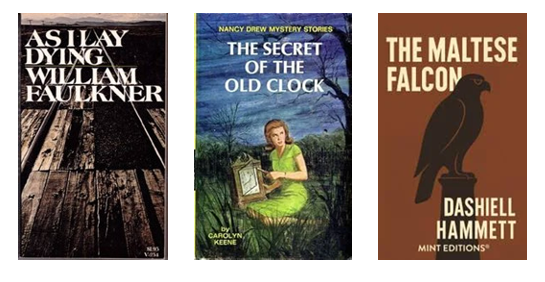
Among the books that have just entered the public domain are As I Lay Dying by William Faulkner; The Maltese Falcon by Dashiell Hammett; Agatha Christie’s The Murder at the Vicarage, which is the first novel featuring the Miss Marple character; the first four Nancy Drew books, beginning with The Secret of the Old Clock; The Little Engine That Could; and certain works by Noël Coward, T.S. Eliot, Evelyn Waugh, John Dos Passos, Edna Ferber, and W. Somerset Maugham.
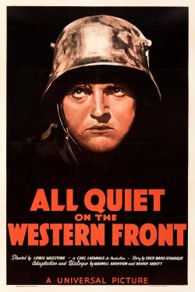
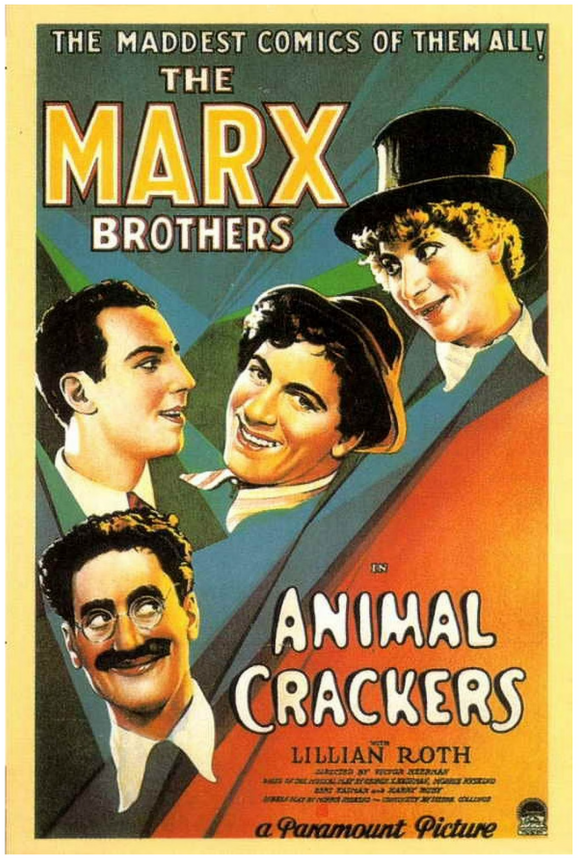
Notable films that entered the public domain include All Quiet on the Western Front, which won the Academy Award for Best Picture; King of Jazz, which included Bing Crosby’s first feature-film appearance; one of my favorites of all time: Animal Crackers, starring the Marx Brothers (“One morning I shot an elephant in my pajamas. How he got in my pajamas, I don't know."); Soup to Nuts, which starred later members of The Three Stooges; Greta Garbo’s first “talkie” film; Jean Harlow’s film debut; and The Big Trail, which featured John Wayne’s first leading role.
Early iterations of several cartoon and animated characters entered the public domain as well. But there are greater risks involved in making unfettered use of these characters in new works. For one thing, it is only the versions of the characters as they existed in 1930 that have entered the public domain; later revisions to and modernizations of such characters, as well as later storylines featuring the characters, remain subject to U.S. copyright protection. In addition, many characters are also protected by trademark law, so the owners of characters that have entered the public domain may have other legal recourse for unlicensed uses by members of the public.
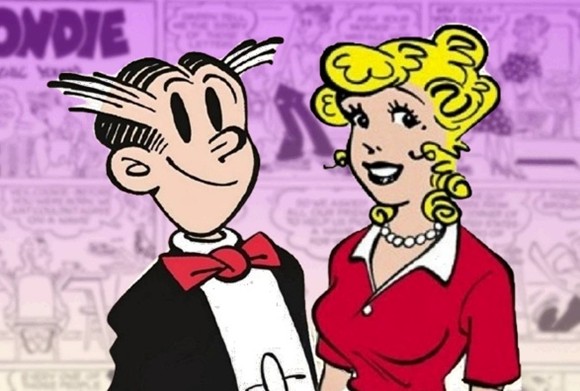
Among the 1930-vintage characters that have entered the public domain are: “Betty Boop” from Fleischer Studios’ Dizzy Dishes; “Rover,” who was later renamed “Pluto,” in certain Disney works; “Blondie” and “Dagwood” from the Blondie comic strips; and a number of “Mickey Mouse” cartoons and comic strips.
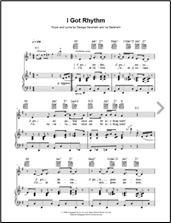
Musical compositions – the musical notes and lyrics that typically were published as “sheet music” – entered the public domain, too. For example, I Got Rhythm, I've Got a Crush on You, But Not for Me, and Embraceable You, all of which were composed by George Gershwin with lyrics written by his brother, Ira, are now freely usable. So are Georgia on My Mind (music by Hoagy Carmichael, lyrics by Stuart Gorrell), Dream a Little Dream of Me (music by Fabian Andre and Wilbur Schwandt, lyrics by Gus Kahn), and the first English translation of Just a Gigolo.
Finally, a few of the notable sound recordings that have lost federal copyright protection in the U.S. include Marian Anderson’s rendition of Nobody Knows the Trouble I've Seen, Yes Sir, That's My Baby, recorded by Gene Austin, and Sweet Georgia Brown, recorded by Ben Bernie and His Hotel Roosevelt Orchestra.
Creators: Have at it, and Happy New Year!
/Passle/5fb3c068e5416a1144288bf8/SearchServiceImages/2026-10-15-19-12-41-278-6ad125a90e7e30becd8e3a93.jpg)
/Passle/5fb3c068e5416a1144288bf8/SearchServiceImages/2026-10-15-21-36-52-140-6ad14774aa6596dee34af4a3.jpg)
/Passle/5fb3c068e5416a1144288bf8/SearchServiceImages/2026-10-12-21-33-47-025-6acd523bc73178b1cd9448b4.jpg)
/Passle/5fb3c068e5416a1144288bf8/SearchServiceImages/2026-10-12-16-37-45-898-6acd0cd93a2af61876051cca.jpg)